
Offering Livestock Trailer Hire in Ballarat

  • Competitively Priced Trailer Hire
  • Offering a Wide Range of Trailer Types
  • Quick Response Times
03 5336 0604

Get A Quote


Move Animals With Ease


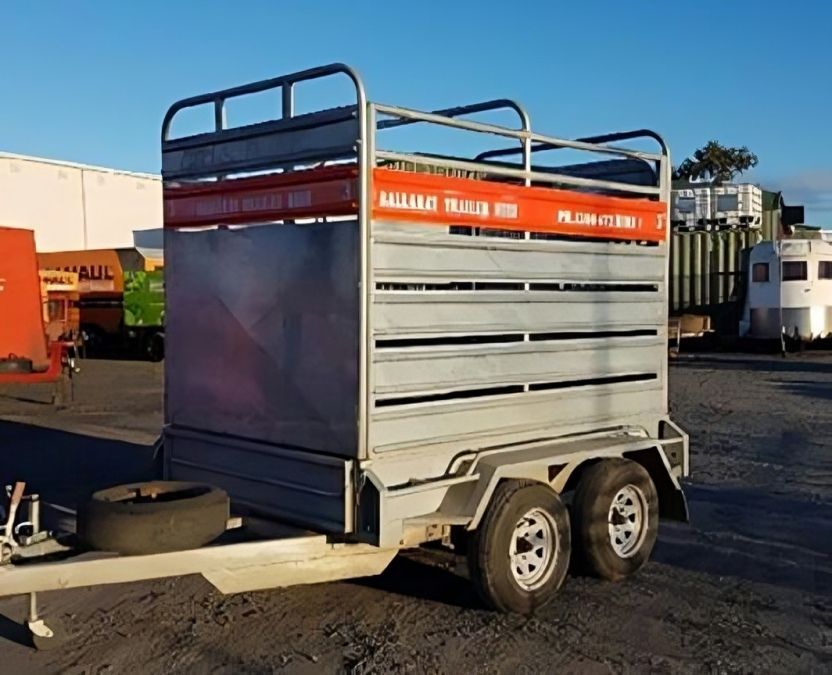
Ballarat Trailer Hire offers a range of livestock trailers, perfect for moving small numbers of animals. Our livestock trailers are designed with the safety and comfort of your animals in mind, ensuring a stress-free transportation experience.


Livestock Trailer Hire Details:


  • Price: Hire rates for our Livestock Trailers range from $100 to $120 per day (24 hours), offering affordable solutions for transporting your animals.
  • Availability: With our range of livestock trailers, we can accommodate your needs, whether you're transporting a few animals or a larger group.
  • Safety: Our livestock trailers are well-maintained and comply with all relevant safety standards, ensuring the safety of your animals during transport.


Contact us today to learn more about our livestock trailer hire services and how we can help you transport your animals safely and efficiently. Call (03) 5336 0604. Servicing Ballarat and surrounds.
Enquire Now

Livestock Trailer Features


Here are some features of our livestock trailers:

  • Sizes: Our livestock trailers are available in the following sizes: 8’x5’, 10’x6’ and 12’x6’, providing ample space for your animals.
  • GVM: All our livestock trailers have a GVM of 2,000kg, ensuring they are suitable for transporting animals safely.
  • Rear Sliding Door & Loading Ramp: Each livestock trailer is equipped with a rear sliding door and loading ramp, making it easy to load and unload your animals.


To learn more, get in touch today.

Get in Touch

Frequently Asked Questions


  • Can you transport livestock in a normal trailer?

    No, livestock should not be transported in a standard box or flat trailer unless it is properly fitted with compliant livestock sides and secure gating. Livestock trailers are purpose-built with enclosed, ventilated sides and reinforced flooring to safely contain animals during transport. Using an unsuitable trailer increases the risk of injury, escape, fines and breaches of animal welfare laws. Australian transport standards require animals to be carried in a way that prevents harm and minimises stress, which is why livestock-specific trailers are strongly recommended.

  • Do livestock trailers need to meet animal welfare regulations?

    Yes, livestock transport in Australia must comply with national and state-based animal welfare standards. These guidelines cover space allowances, ventilation, loading and unloading practices, maximum travel times and fitness of animals for transport. Trailers must be structurally sound, free from sharp edges and provide secure containment. Failing to meet welfare standards can result in penalties and prosecution. Anyone transporting livestock should review the Australian Animal Welfare Standards and Guidelines relevant to their species before travel.

  • How do you prepare animals for transport in a livestock trailer?

    Preparing livestock for transport involves ensuring animals are healthy, fit to travel and appropriately rested before loading. Animals showing signs of illness, injury or late-stage pregnancy may not be suitable for transport under welfare regulations. It’s important to load calmly to reduce stress and avoid overcrowding. Providing adequate airflow and avoiding extreme weather conditions also supports animal wellbeing. Planning travel routes, rest stops and unloading procedures in advance helps minimise transport time and reduce risks during transit.

  • How do you clean and disinfect a livestock trailer after use?

    Cleaning a livestock trailer is essential to prevent the spread of disease between properties. After unloading, all manure, bedding and organic matter should be removed. The trailer should then be washed thoroughly with water and, where appropriate, disinfected using approved livestock-safe cleaning agents. Floors, gates and internal panels must be cleaned carefully, especially if transporting animals from different farms. Proper cleaning and biosecurity practices are particularly important when attending saleyards or moving animals across regional areas.

Learn More
